At WomanACT, we are very concerned by the recent announcement by the Ontario Ministry of Education to repeal Ontario’s sexual health education curriculum in September. As an organization committed to women’s safety and gender equality, we believe that access to effective and relevant sex education is a key contributing factor to the health and well-being of children and young people.
Compromising children and young people’s access to information on consent and equitable relationships means putting people’s health, safety and rights at risk. Comprehensive sexual health education that is inclusive, rights-based and promotes gender equality has a role in preventing violence against women. Schools are well placed to shift social norms, attitudes and behaviours. To this end, the curriculum must reflect and respond to the lived realities of young people. Teaching children and young people about consent and healthy relationships is critical.
Just this month, the Canadian Femicide Conservatory released its mid-year report showing that in 2018 alone, 78 women and girls have died as a result of femicide in Canada. 41 of these women and girls were in Ontario. With such shocking numbers of women and girls dying as a result of dating violence, intimate-partner violence, we need to commit to learning and discussing safe, healthy and equitable relationships in our education system. With a rise in cyberbullying, the curriculum must cover how children and young people can protect themselves online and respect one another online. We need a curriculum that informs young people of their rights online.
Sexual health education is more than words written on a curriculum document; it is about promoting critical conversations in schools among young people; conversations about gender, sexuality, choice, boundaries and rights. We want the Government of Ontario to send the message that these are vital conversations that must be encouraged and fostered.
As per our open letter submitted to the Ministry of Education, our concerns are shared by a number of organizations and individuals. The open letter prepared by WomanACT has been endorsed and co-signed by a total of 13 Toronto Based organizations, 41 Organizations based in the province of Ontario, 18 Organizations working in other provinces of Canada, 4 Canada-wide organizations and eight individual experts.
In November 2017, the Canadian government launched the first ever National Housing Strategy in Canada. As a part of this strategy, the federal government made a commitment to working towards a human rights-based approach to housing. The government held a public consultation with communities across Canada on the proposed approach.
In preparation for this submission, WomanACT coordinated a consultation process with stakeholders providing Violence Against Women services in the city of Toronto. WomanACT’s submission stresses the importance of recognizing the intersections between housing, homelessness and violence against women and the many barriers that women face when trying to seek safety. WomanACT recommends that a rights-based approach to housing must recognize the critical importance of safety in achieving adequate housing and the right for women to remain in their own homes. WomanACT’s submission also recommends that the principles in the National Housing Strategy can be further strengthened through a robust intersectional Gender-Based Analysis, meaningful engagement with Women with Lived Experience and a commitment to addressing systemic inequality and discrimination.
Read our policy submission here
In November 2017, the Canadian government launched the first ever National Housing Strategy in Canada. As a part of this strategy, the federal government made a commitment to working towards a human rights-based approach to housing. A key component of the rights-based approach proposed focuses on meeting the housing needs of the most vulnerable groups across Canada. The government is now undertaking a public consultation on this proposed approach. As part of this consultation, the government also developed a discussion paper.
We know all too well the links between housing, homelessness and violence against women and the significant barrier that housing is to women’s safety. We believe that this is an opportunity to offer input and feedback on the core principles guiding the government’s rights-based approach as well as help shape the key initiatives. We want to ensure that the National Housing Strategy responds to the diverse needs and experiences of women experiencing violence.
WomanACT will be developing a submission in response to this consultation and is welcoming input and ideas on the core principles and some key initiatives included in the strategy.
If you are a community agency or interested community member who would like to share your thoughts and feedback on how a rights-based approach to housing can be realized in Canada, please contact us.
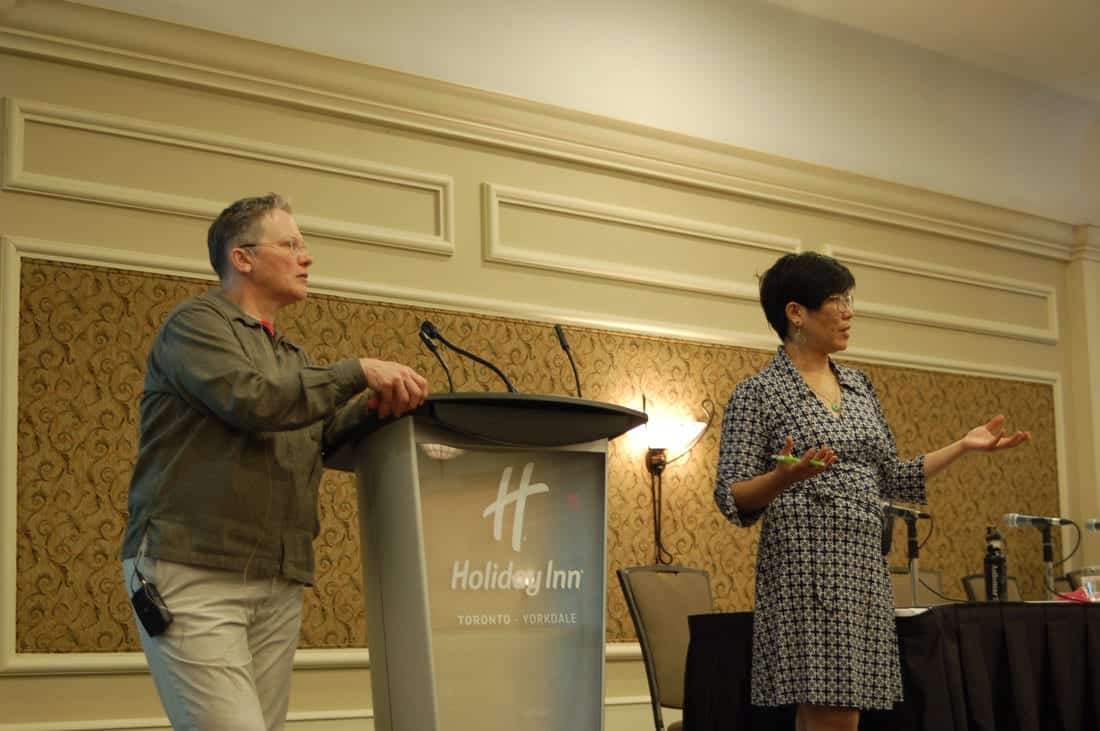
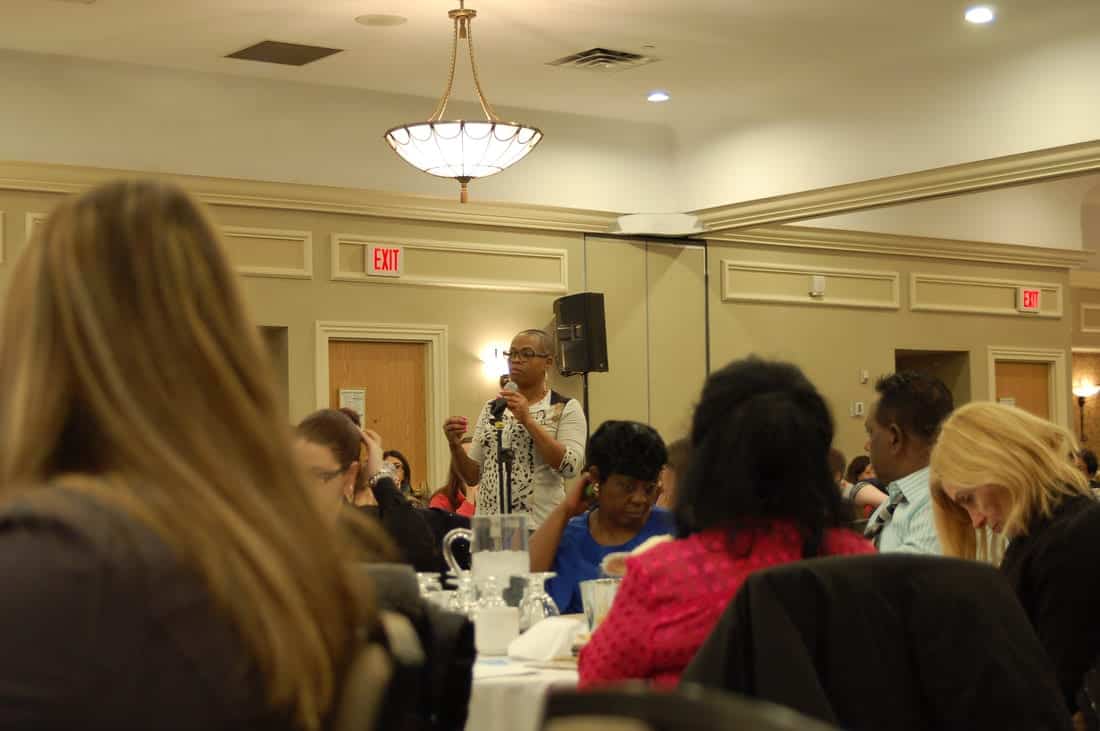
On Tuesday, March 6th and Wednesday, March 7th, close to 250 front-line workers from 40 agencies in Toronto’s Violence Against Women (VAW) sector attended the 2018 Supporting Survivors by Supporting Staff (SSxSS) Training Conference. The event is a part of WomanACT’s annual End Violence Against Women Week in Toronto.
This year’s training, entitled ‘Let’s Get Into It Together’, was facilitated by Bo Yih Thom and J. McKnight. These facilitators lead us through a fully packed, 2-day workshop experience focused on four core topics: trauma-informed care and practice, trauma and the brain, self-reflection, and unpacking bias.
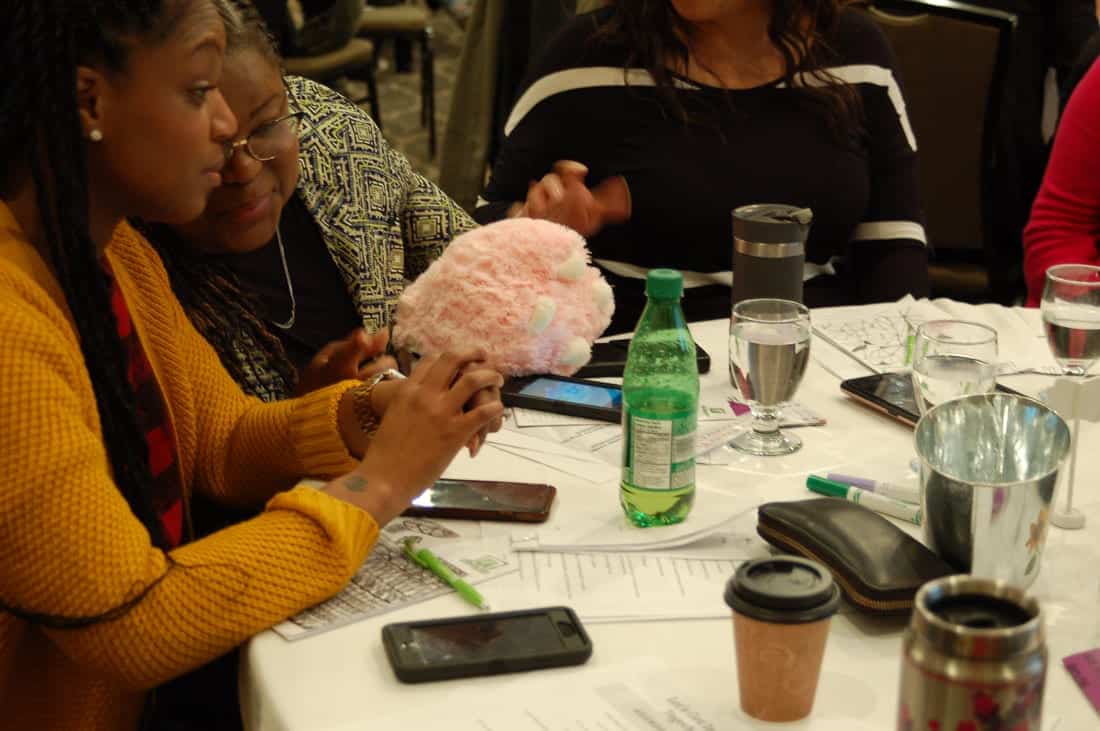
Each day, we were guided through several interactive practices and exercises to give front-line staff in the GTA the opportunity to network and engage with each other. Also, through these exercises, participants experienced some of the discomfort, challenges and barriers that women trying to flee violence may face on a daily basis. This was emphasised during an exercise where participants were forced to find new seating arrangements.
Our post conference survey is open until April 6th. If you were at the training, please take a moment to share your thoughts with us. Click here to fill out our short post-conference survey.
This valuable training would not be possible without the generous funding of The Ministry of Community and Social Services.
We are happy to support Bill 26 (formerly known as Bill 177), The Domestic and Sexual Violence Workplace Leave and Training Accommodation Act.
Bill 26 recognizes the critical intersections between domestic violence and the workplace and introduces workplace provisions, including up to 10 days of paid leave for survivors to take paid time away from work to receive important support and services, such as legal support or counselling, without risk of losing their employment.
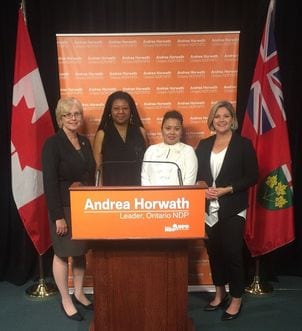
WomanACT joined a press conference on Thursday September 28th in support of Bill 157, an Act to increase workplace protection for survivors of domestic and sexual violence.
London West MPP Peggy Sattler’s Private Member’s Bill 26, Domestic and Sexual Violence Workplace Leave, Accommodation and Training Act, 2016 passed second reading in October 2016. On Thursday, NDP leader Andrea Horwath brought a new bill, Bill 157, Domestic and Sexual Violence Protection Act, 2017, for debate.
The new pill builds on the previous Private Member’s Bill and pushes for:
- Amending the Employment Standards Act (ESA) by requiring employers to provide leave to employees who have experienced DV or SV, or whose children have experienced DV or SV; This leave includes up to ten (10) days of paid leave, as well as 15 weeks of unpaid leave per calendar year.
- Including a provision that requires the paid portion of this leave to be covered by the Ontario government.
- Amending the Occupational Health and Safety Act (OHSA) to require that employers provide mandatory training on DV and SV to all managers, supervisors and workers.
The violence that women experience at home often extends into the workplace. A 2014 study by the Canadian Labour Congress and Western University’s Centre for Research & Education on Violence Against Women & Children found that of those workers who had experienced intimate partner violence, 82% reported that it had impacted their job performance and 10% reported that they were fired as a result of the impacts it had on their work. In addition, 42% of workers with experience of violence had disclosed it to someone at work. Access to income is a critical factor that can help women flee a violence relationship and maintain their safety and economic independence.
WomanACT supports Bill 157 because it recognizes the intersections between women’s safety and their employment and provides important resources and supports for survivors.
We are excited to announce a new project which will be undertaking intersectional gender-based analysis of public policies to better understand their impacts on survivors and advocate for policy change.
In October 2016, Status of Women Canada invited organizations to propose projects that advance gender equity across Canada. Through this call for proposals, the aim was to identify a total of 150 women leaders in various sectors, organizations, and communities across the country to mark the 150th anniversary of Confederation in 2017. On August 16, 2017, the Honourable Maryam Monsef, Minister for Status of Women Canada, announced funding to nine organizations across the Toronto region, including WomanACT, as part of this call for proposals. All projects will address systemic barriers over a 36-month period through three components: (1) increasing women’s economic security and propserity; (2) encouraging women and girls to be better represented in leadership and decision-making roles; and (3) ending violence against women and girls.
WomanACT’s 36-month project will prevent recurring violence against women by focusing on barriers that prevent women from accessing services, social benefits and safety measures when exiting emergency shelters. A gender analysis of the impact of policies related to social security, landed immigration status, child custody, affordable housing, and post-secondary education grants will be completed by working with stakeholders from community networks. This analysis will inform the development of an action plan to advance solutions to maximize safety and opportunities for women rebuilding violence free lives. The organization will host policy dialogues with municipal, provincial, and federal subject matter experts, strengthening longer term partnerships for systemic change. Recommendations and final project outcomes will be shared widely with partners, stakeholders and elected officials through ongoing dialogue.
Harmy Mendoza, Executive Director of WomanACT, shares that, “Leaving an abusive relationship can be a difficult and dangerous transition. This project will analyze the impact of policies in place to assist survivors of violence in rebuilding their lives. By working with our partners in the community and supporting policy dialogues, the project will strengthen longer term partnerships for systemic change. We will broadly share our knowledge and support the implementation of suggested recommendations.”
As part of their annual End Violence Against Women Week, the Woman Abuse Council of Toronto hosted over 250 participants per day for a week of education, training and discussions in Toronto, Ontario. On Tuesday morning, one of their featured keynotes was Dr. Gabor Maté, a physician, best-selling author and renowned speaker on a range of issues such as addiction studies and childhood development. His focus was centered on the idea of “compassion fatigue”, really premised on how to care for others while caring for ourselves. Compassion fatigue is more than just what is commonly known as ‘burning out’, it refers to “the overall experience of emotional and physical fatigue that social service professionals experience due to chronic use of empathy when treating patients who are suffering in some way”[1]. It’s also been referred to as ‘the cost of caring’. This is certainly a topic many people in the audience could identify with.
Dr. Maté is known nationally and is praised in harm reduction communities for his work in Vancouver’s downtown east side for over 12 years. If you’ve ever read his books, he weaves case studies with scientific theory, and his own experiences. The premise is that much ‘addiction’, mental illness or problematic behaviours is rooted in a common pathway: trauma – or hurt from one’s childhood, and the idea that the “patterns we develop around pain continue to generate more pain”.
Applying this to the case of compassion fatigue, Dr. Maté went on to explain that people who work with vulnerable communities can also be traumatized from working and hearing about other people’s trauma. The idea of compassion fatigue then becomes also rooted in our own “stuff” – meaning it’s less about the nature of the work itself, but how we relate to the work and how we care for ourselves. More broadly, we often worry about others without taking care of our own emotional responses, and most often women are ‘programmed’, or socially conditioned, to take that role on. The idea of compassionate fatigue is what Dr. Maté more accurately described as lack-of-compassion-for-the-self fatigue. Further, it can be part of a deeper inability to say no, which can exacerbate the difficult nature of the work.

Very central to Dr. Maté’s talk was the mind /body connection. In fact, historically, different medical traditions around the world are very much premised on the idea that the two can’t be separated. But in Western medicine, although we have made lots of scientific advances when it comes to acute care, in dealing with chronic conditions, we often focus on simply alleviating symptoms despite what traditional wisdom has taught us about this interconnection.
So in this way an illness is not just individual, it’s also conditioned by social facts. For example, Dr. Maté described a study which included both children and mothers. The children of mothers who are stressed and depressed were linked to an increased likelihood of having asthma. Stress, then, can be a powerful social experience, which is not just emotional but also physiological. The centers in the brain that process emotion are connected to one unifying system that includes our hormonal apparatus, nervous system, heart, gut, and more, and any aspect will have impacts on other functions. It makes sense that emotions are deeply implicated in the development of illness. These are observations that Dr. Maté makes based on his own experience working with chronically ill patients, and really prioritizes the critical role of individual emotional make up in a variety of disease.
On the role of burnout, I appreciated the idea that burnout is tied to us having to deal with our own self, but also that many people, particularly those working with vulnerable populations, often forget about their own self-care. The health, both mental and physical, of frontline workers, is influenced by the conditions in which they live and work. Particularly with workloads increasing and funding being reduced across the community service sector, front line workers often put their own physical, emotional and spiritual needs aside.

I really enjoyed the talk, and questions ranged from sharing experiences to queries about how we can be better at identifying the need for self-care. One question I had centered on the idea of trauma and how we define these experiences. For example, I struggle with the idea that all addiction is rooted in trauma precisely because if you look hard enough, don’t we all have some experiences that can be interpreted as trauma? Do childhood stressors always manifest itself as elevated risks? And if trauma really can be found or interpreted in anyone’s past (if we look hard enough), then how does this shape the explanatory power of how trauma affects our behaviours?
Overall, what really resonated with me was the need to listen to our bodies—and our gut, and unpacked a deeper source around the idea we know as “burnout”. Many people in the audience provide intensive support for others in time of transition and crisis. This work is arduous, demanding and complex, and often self-care takes a backseat. But every once in a while, the helper needs to be reminded to take care of themselves.
[1] Newell, J. M., & MacNeil, G. (2010). Professional burnout, secondary traumatic stress, and compassion fatigue: A review of theoretical terms, risk factors, and preventive methods for clinicians. Best Practices in Mental Health: An International Journal, 6 (2), 57-68