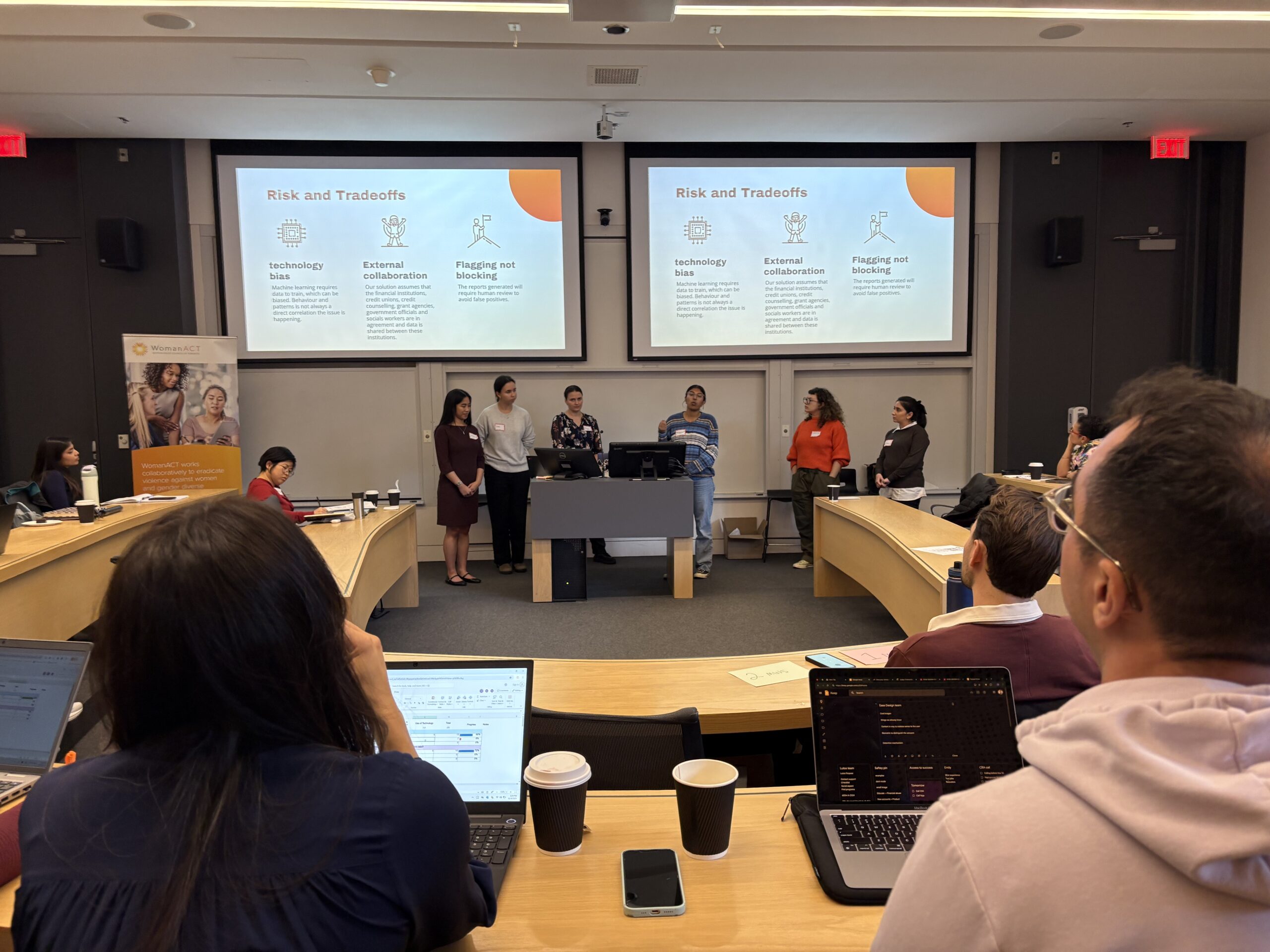
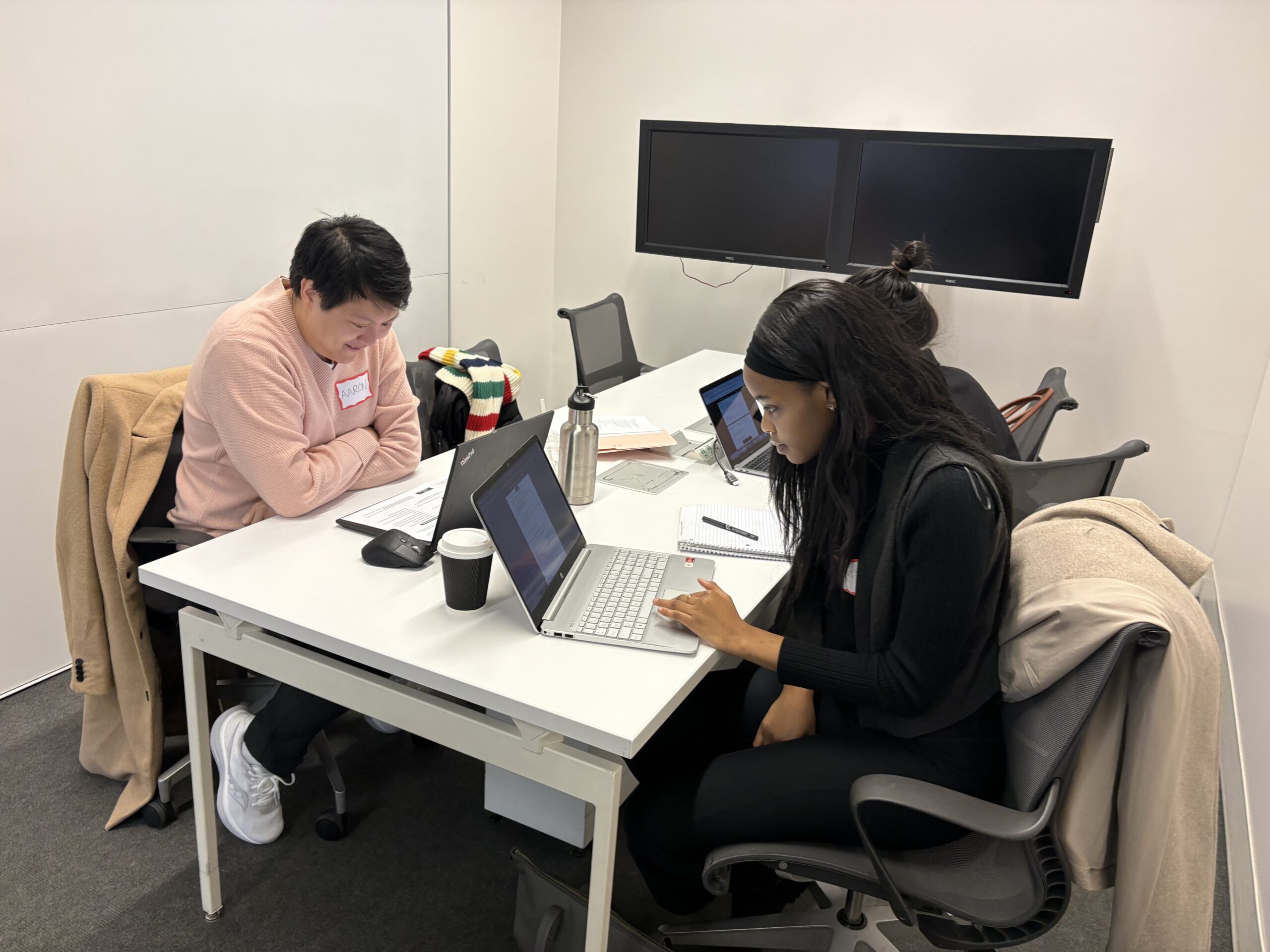
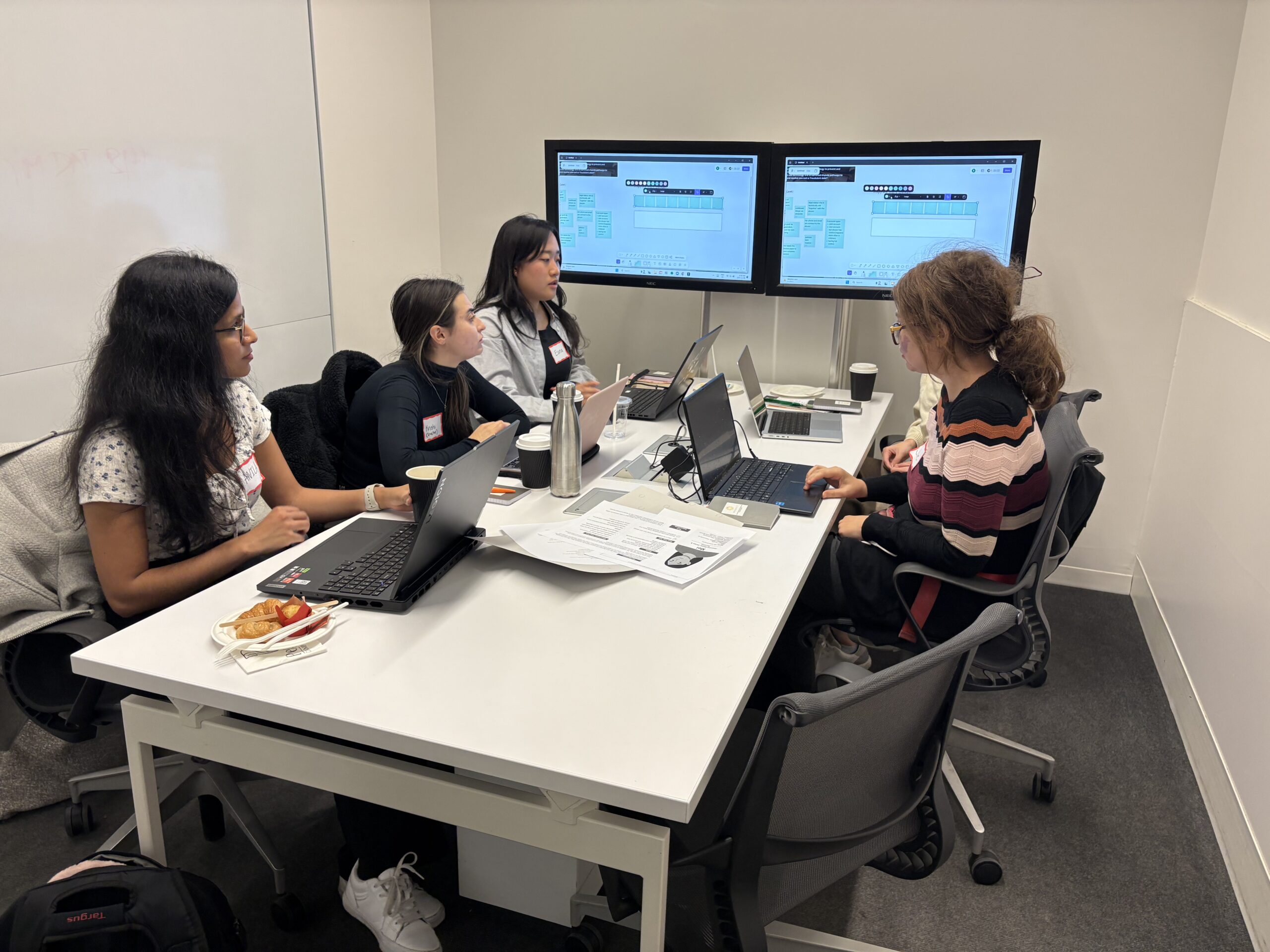
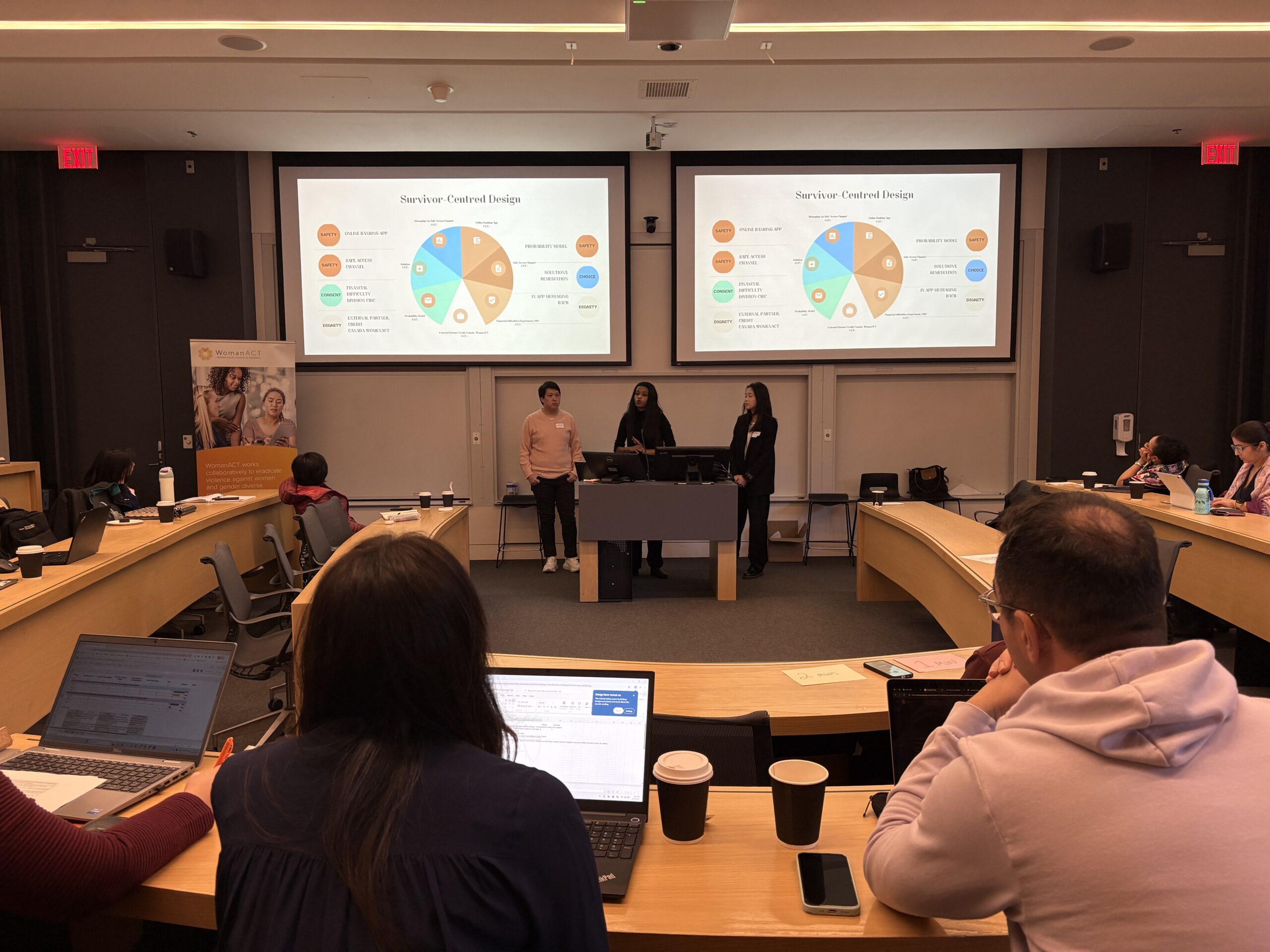
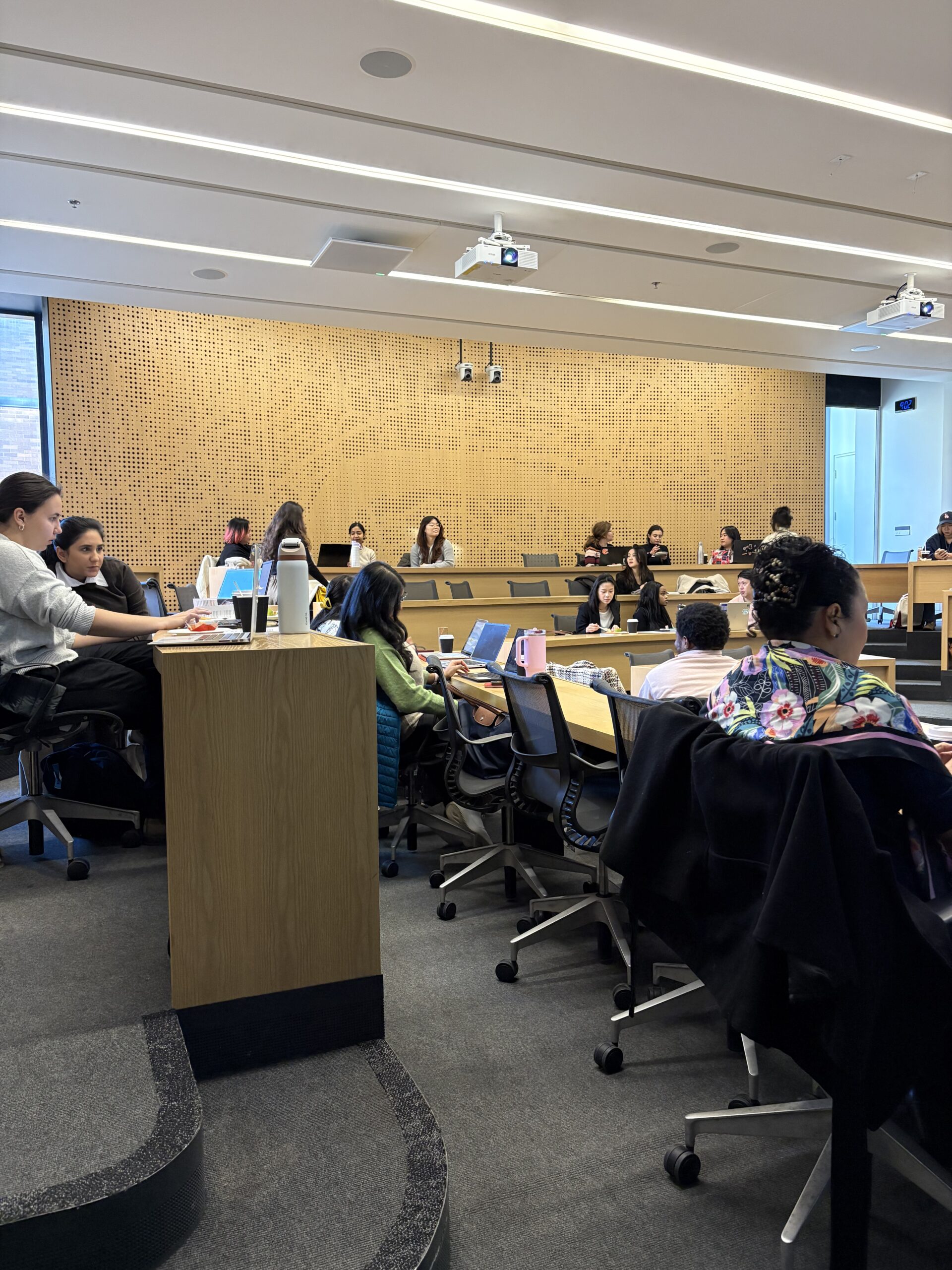
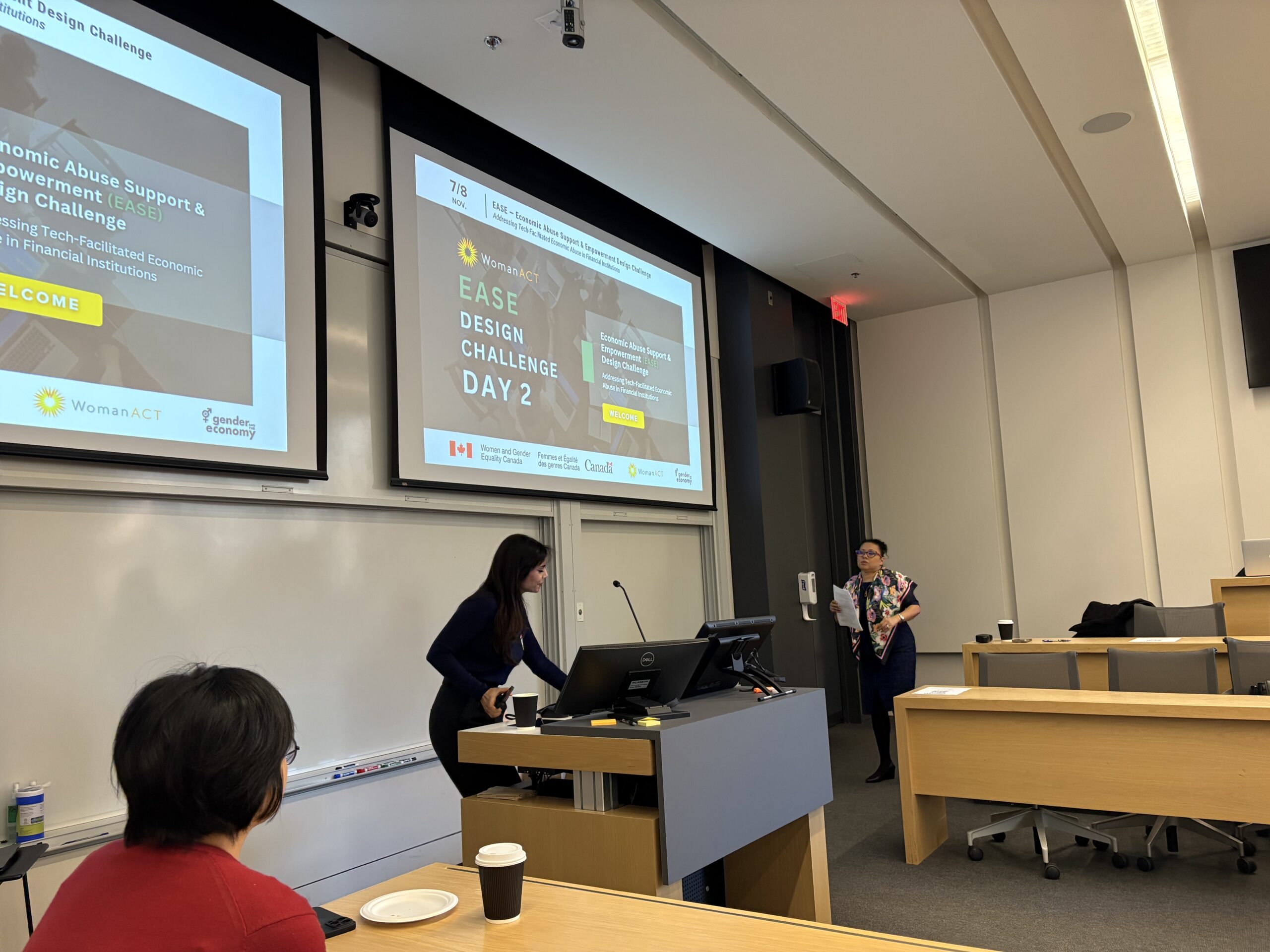
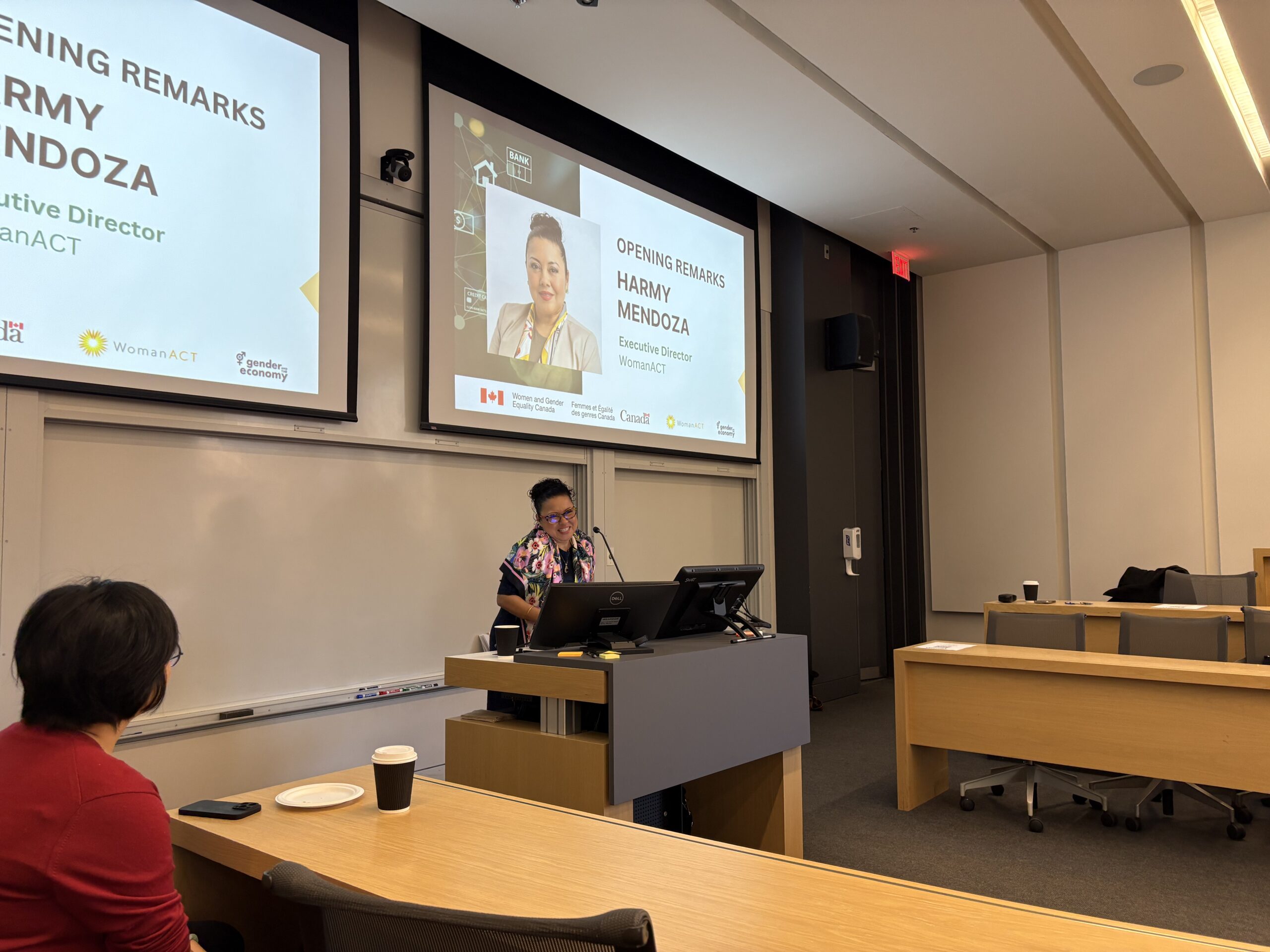
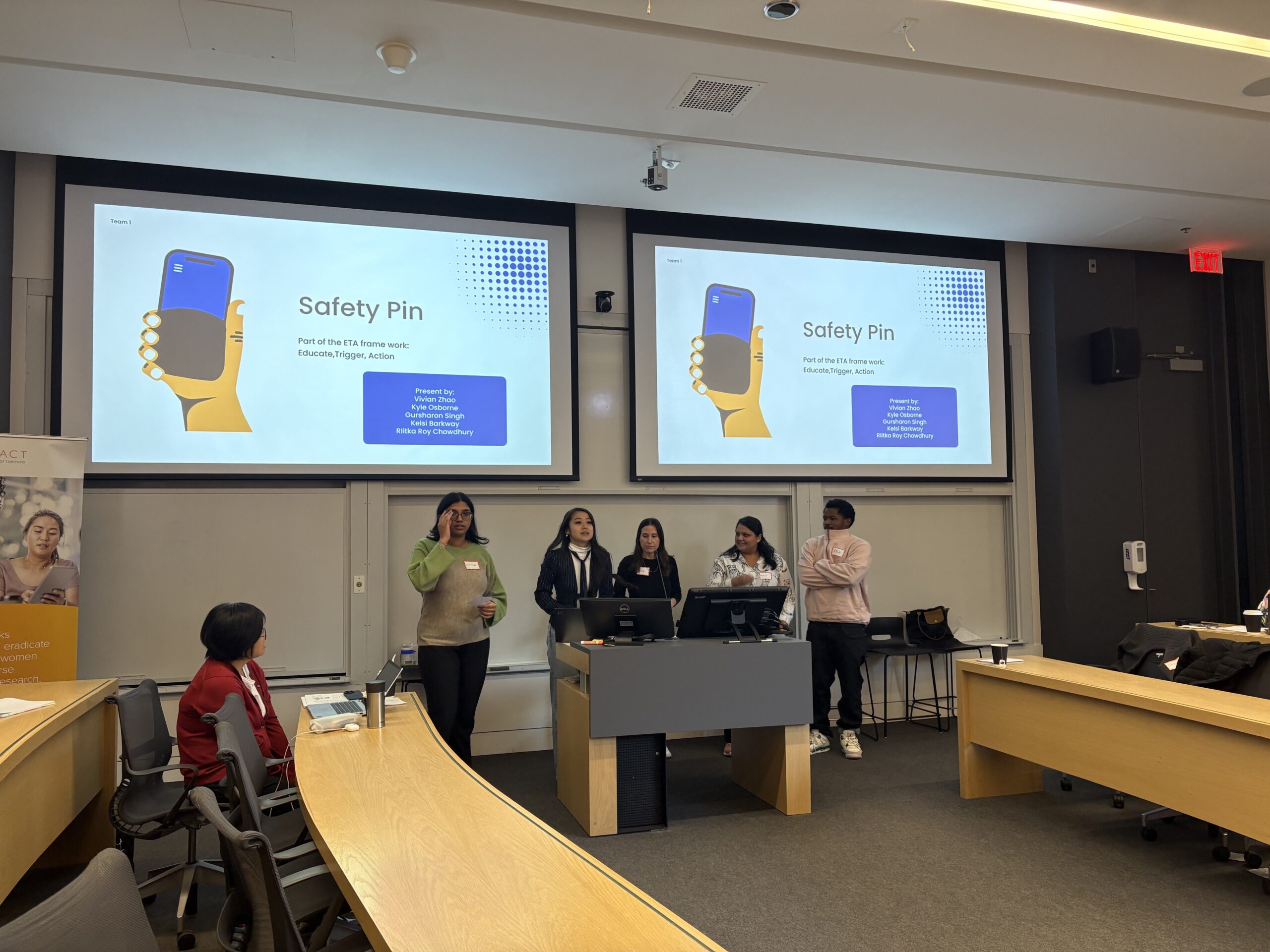
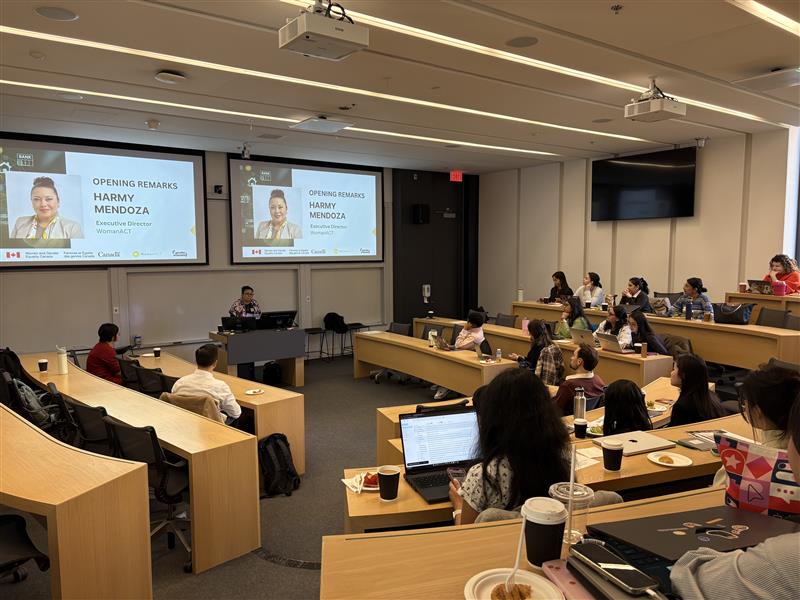
The EASE Design Challenge, hosted by WomanACT and by our Community Partners at the Institute for Gender and the Economy (GATE) at the Rotman School of Management was a dynamic two-day event is part of our Economic Abuse Support & Empowerment (EASE) project funded by Women & Gender Equity Canada (WAGE). The initiative focuses on generating innovative, survivor-centred solutions aimed at financial institutions to address tech-facilitated economic abuse.
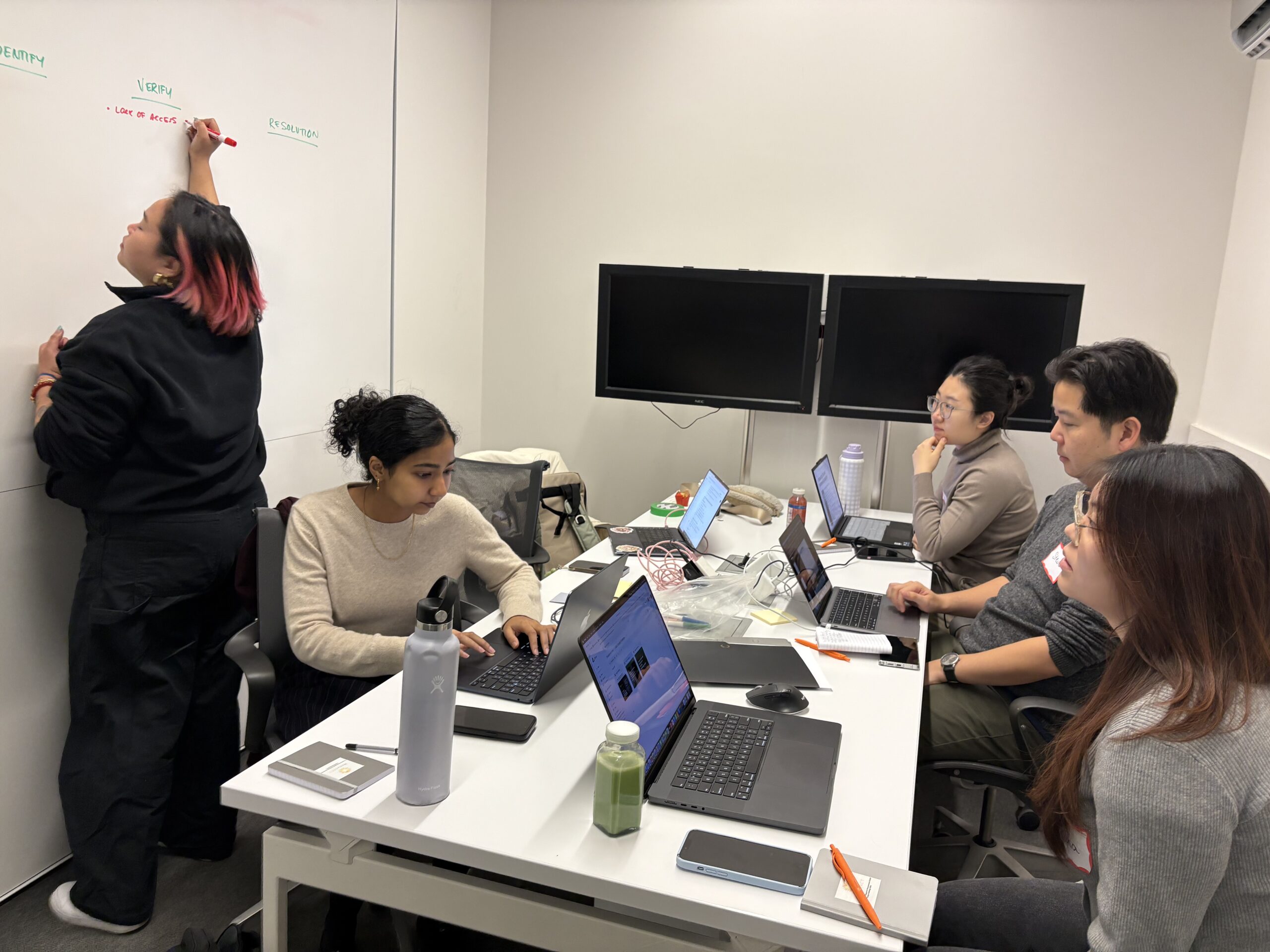
The EASE Design Challenge brought together students, and professionals in the fields of finance, user experience, and technology to co-create innovative solutions that address tech-facilitated economic abuse. Grounded in research led by WomanACT and mentorship from systems experts, this challenge will ask participants to develop survivor-centred prototypes and business cases to enhance safety, financial independence, and privacy for survivors engaging with banking systems.
About the EASE Design Challenge Case Study
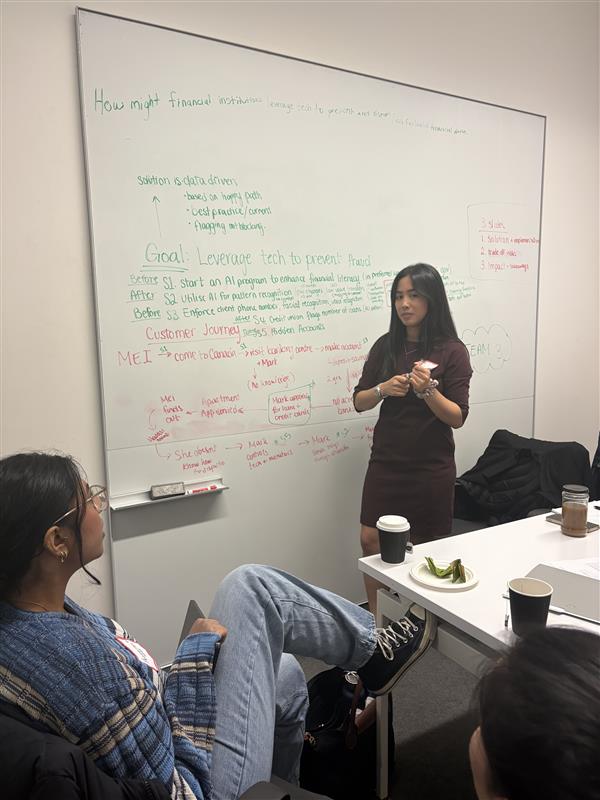
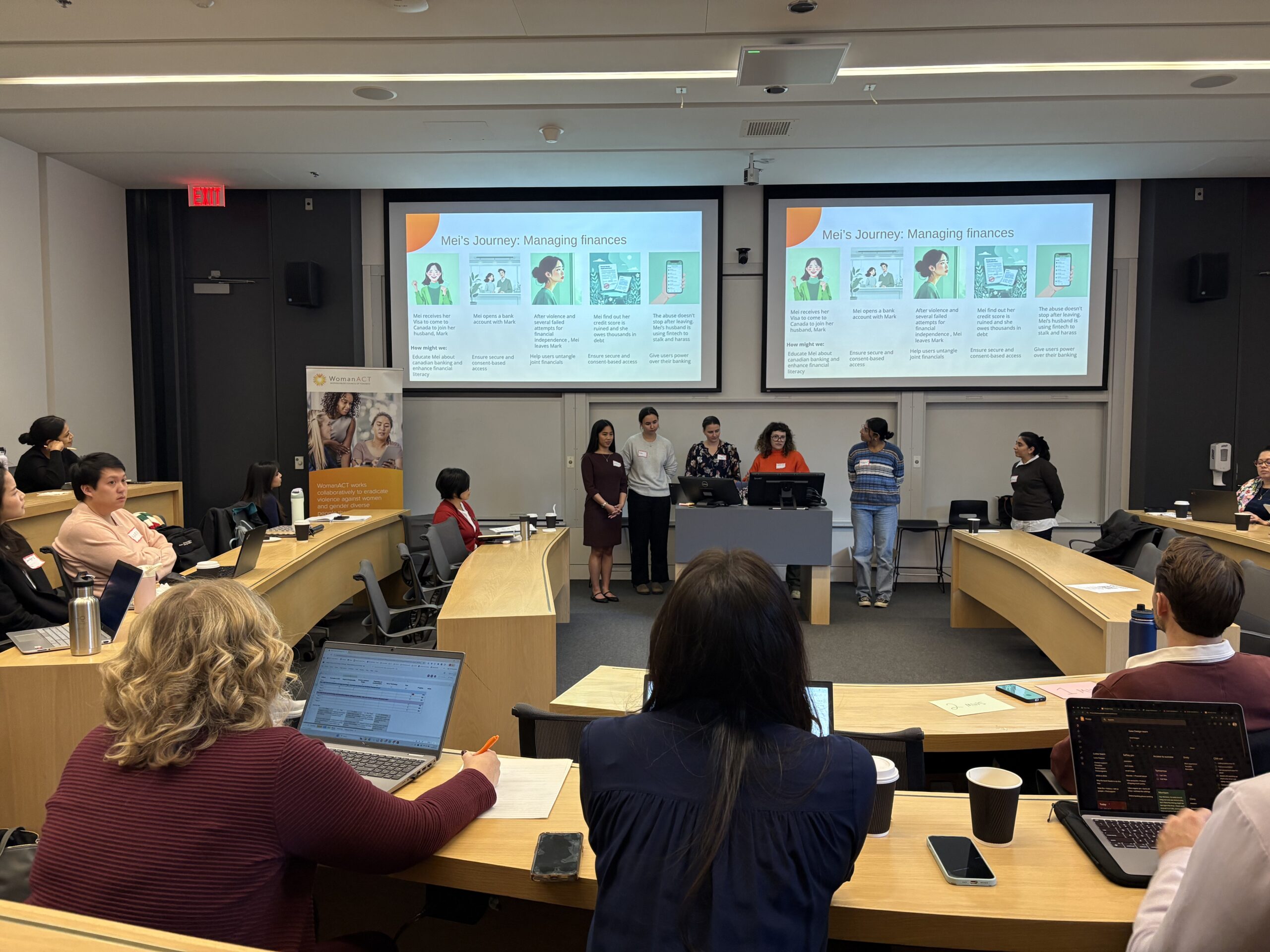
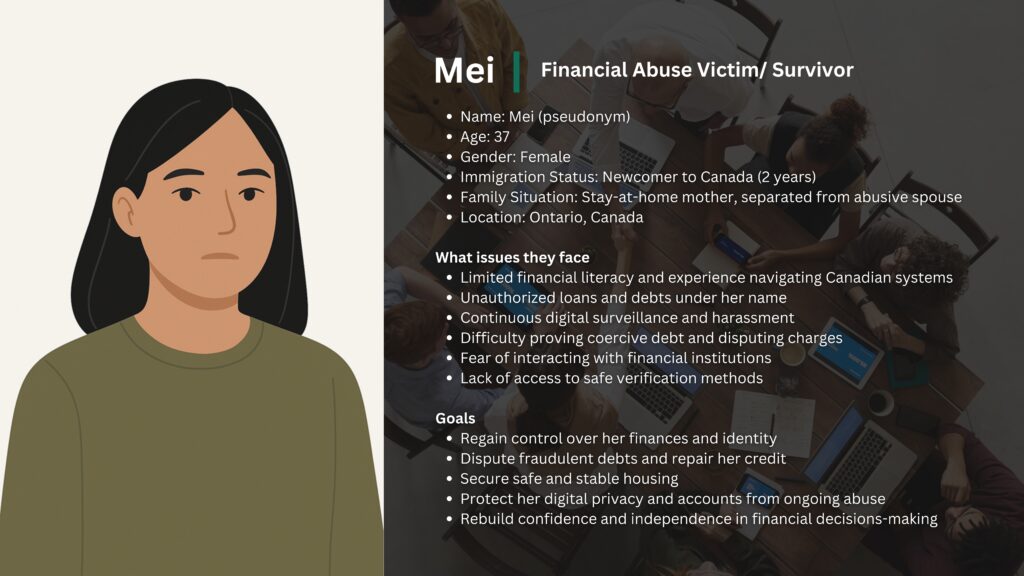
To guide participants in developing survivor-centred, practical solutions, teams were provided with a fictional case study—Mei—created using insights from real experiences shared by survivors of economic and financial abuse through WomanACT’s research and interviews. While Mei’s story is fictional, the harms, tactics, and barriers reflected in the case are grounded in what survivors across Ontario have told us.
The case centred around Mei, a 37-year-old newcomer to Canada experiencing financial abuse and technology-facilitated control from her husband. After discovering multiple fraudulent loans and drained savings, Mei sought help from her bank to restore her financial security, dispute coerced debt, and regain control over her accounts and privacy.
This case framework supported teams in designing solutions that respond to real-world challenges survivors face in digital banking environments today.
Each team was assigned one of two challenge questions, designed to explore both preventative and responsive approaches to tech-facilitated financial abuse. Using Mei’s situation as their anchor, participants were asked to create an innovative presentation addressing one of the following:
How might financial institutions leverage technology to prevent and disrupt tech-facilitated financial abuse?
How might banks use technology and streamlined dispute pathways to identify, verify, and resolve coerced or fraudulent debt?
Get Involved
For more information, please contact: Aakanksha Mathur (she/her) Manager of Public Policy, Advocacy and Communications amathur@womanact.ca
Learn more about the EASE – Economic Abuse Support & Empowerment Project
Economic abuse affects many women and gender-diverse individuals in Canada, with rates as high as 1 in 3 women experiencing it from intimate partners.
This project has been funded through Women and Gender Equality Canada’s Women’s Program
EASE Design Challenge Judges
Skye May Cheung Artist & Teacher
Skye is a Canadian-Asian artist and Neofeminist. Her work is an amalgamation of her Canadian and Asian heritage.
Skye May Cheung Artist & Teacher
Skye is a Canadian-Asian artist and Neofeminist. Her work is an amalgamation of her Canadian and Asian heritage. She blends the subtle colour palettes and sensibilities of Song Dynasty landscape painting with the bold, dynamic brushstrokes characteristic of the Canadian topography. The aim of her work is for meditative purposes and to offer a safe haven from patriarchal violence. It is her hope that the sublime images of nature in her painting will evoke empowering Neofeminist strength to overcome adversity from our patriarchal society. Skye’s personal struggle with domestic violence shapes her artistic purpose, aesthetic and creative process. Skye’s background includes a Bachelor’s degree in art history and second bachelor’s degree in education. This combination feeds her curiosity in simultaneously referencing and questioning patriarchal norms. In 2024, she was featured in Vigilance Magazine, where she discussed how her experiences during the COVID-19 lockdown amplified the need to confront emotional poverty within an abusive environment. Skye has exhibited in a variety of public spaces such as the Varley-McKay Art Gallery, Gallery 1313, Northern Contemporary, The Propellor Art Gallery and the Slanted Door. She has taught Visual Arts at a specialized art high school for 24 years.
Becky Western-Macfadyen Manager of Financial Coaching & Education Credit Canada
Becky leads national programs that help individuals build financial confidence, independence, and long-term money management skills.
Becky Western-Macfadyen Manager of Financial Coaching & Education Credit Canada
Becky Western-Macfadyen is the Financial Coaching and Education Manager at the non-profit credit counselling agency, Credit Canada. She leads national programs that help individuals build financial confidence, independence, and long-term money management skills. With a strong focus on empowering women and survivors of gender-based violence, Becky combines behavioural science with practical tools to help clients take meaningful action toward their goals. Beyond her professional role, she has a long history of crisis support work and currently serves as President of Distress Centre Niagara.
Gabi Santos Product Design Team Lead at Skip
Gabi Santos is a Senior UX Design Team Lead with years of experience spanning UX strategy, product discovery, and UI design.
Gabi Santos Product Design Team Lead at Skip
Gabi Santos is a Senior UX Design Team Lead with years of experience spanning UX strategy, product discovery, and UI design. She has worked across industries including banking, e-commerce, and delivery, and currently leads a team at Just Eat Takeaway focused on enhancing the courier experience globally—including for brands like Skip in Canada. Gabi is passionate about creating simplicity in digital products and making technology more intuitive and human through thoughtful, user-centered design. In addition to her industry work, she has taught UX design at BrainStation, mentoring the next generation of designers. Her approach is grounded in systems thinking and a belief that great design always considers the broader context in which it lives.
Soroush Toloue Lead UI/UX Designer & Accessibility Specialist
Soroush has over 14 years of experience designing inclusive, user-centered products across the finance, government, and healthcare sectors.
Soroush Toloue Lead UI/UX Designer & Accessibility Specialist
Soroush Toloue is a seasoned UI/UX and digital accessibility specialist with over 14 years of experience designing inclusive, user-centered products across the finance, government, and healthcare sectors. With expertise spanning from research to launch, they ensure every solution meets WCAG 2.1 AA and AODA standards for accessibility and scalability. Their portfolio includes work with organizations such as Ontario Health, Electronic Arts, lululemon, ADP, Home Depot, the Ministry of Education, TD, and BMO—leading projects in responsive design, accessibility integration, and the development of scalable design systems.
Meet Our Top Teams
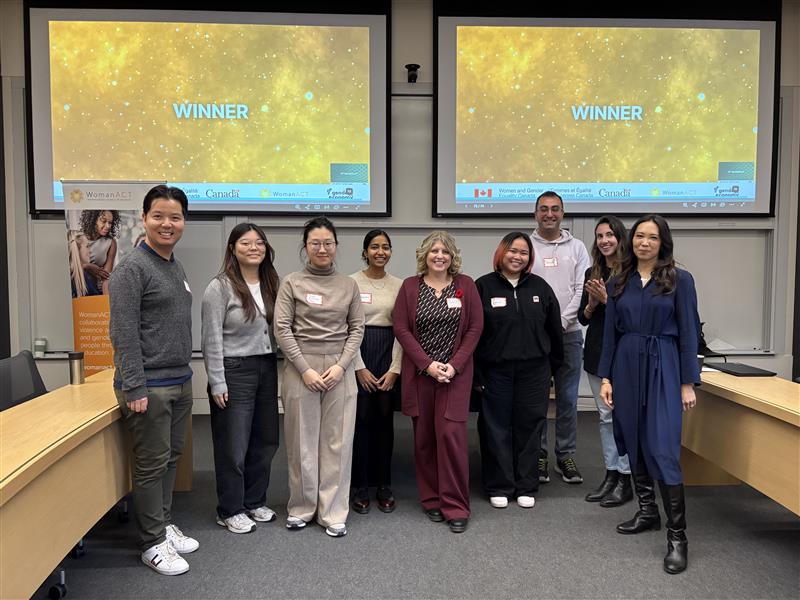
Winners: The Lotus Recovery Pathway
The Lotus Recovery Pathway is an integrated, trauma-informed solution that empowers survivors of financial abuse to regain control. At an individual bank level, the system proactively notifies users of suspicious transactions and streamlines reporting. Survivors can easily verify concerns and connect with trauma-informed bank agents for support. Survivors can then access The Fraud Recovery Hub – a unified hub that provides ongoing assistance through expert advocates, a clear recovery checklist, and also essential third-party resources. Grounded in safety, choice, and autonomy, the pathway offers a holistic approach to resolving coerced or fraudulent debt and rebuilding trust in the financial system.
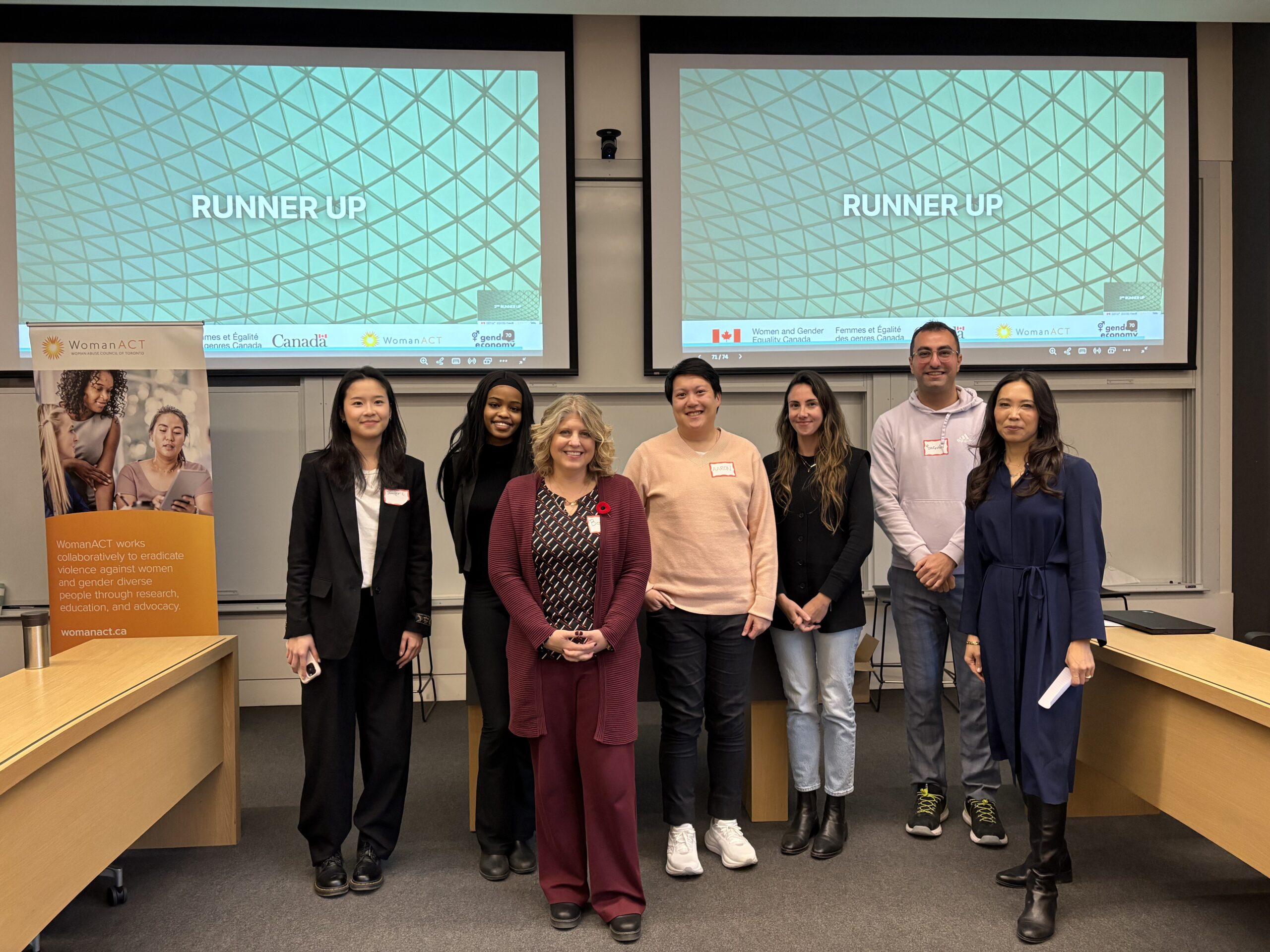
Runner Up: Project Witness-Echo
Project Witness-Echo is a banking technology response protocol designed to support survivors of economic abuse. It helps individuals navigate their financial recovery by connecting them to support and guidance networks, monitoring indicators of ongoing or potential abuse, and facilitating pathways for coerced debt relief. The protocol aims to increase safety, restore financial autonomy, and ensure survivors can access the resources they need to rebuild stability.
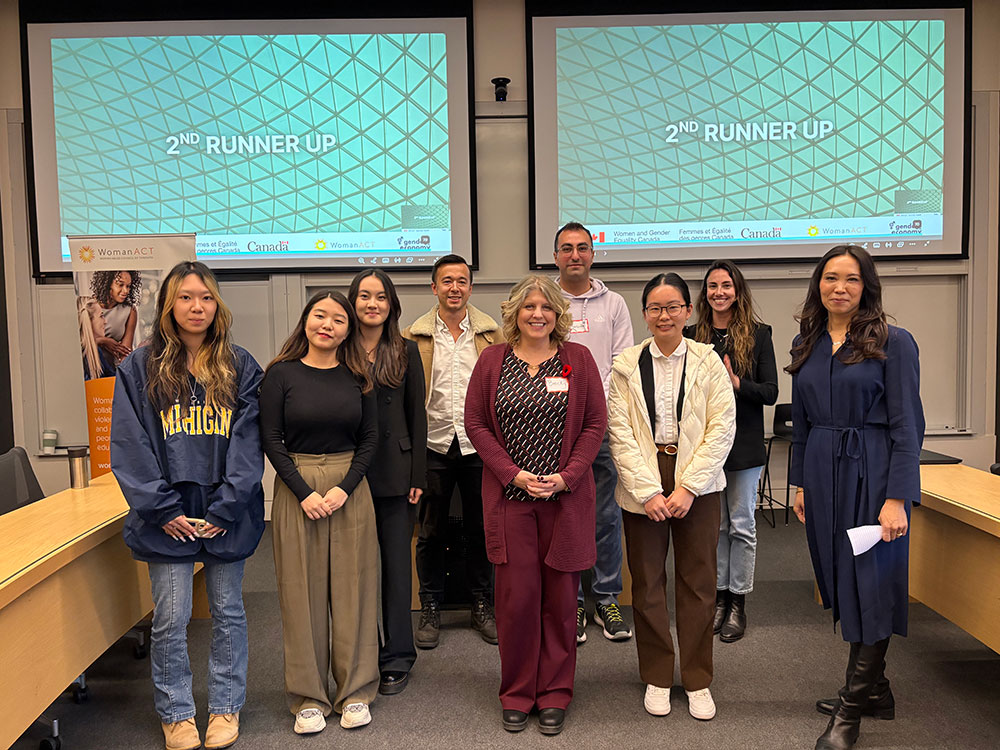
2nd Runner Up
The proposed solution focuses on preventing financial abuse by strengthening account safety and control for survivors. It introduces features such as trusted contacts and devices, designated zones of safe use, and real-time authorization notifications. Together, these measures help protect users from fraud, coercion, and the creation of coerced debt, ensuring survivors can manage their finances with greater confidence and security.